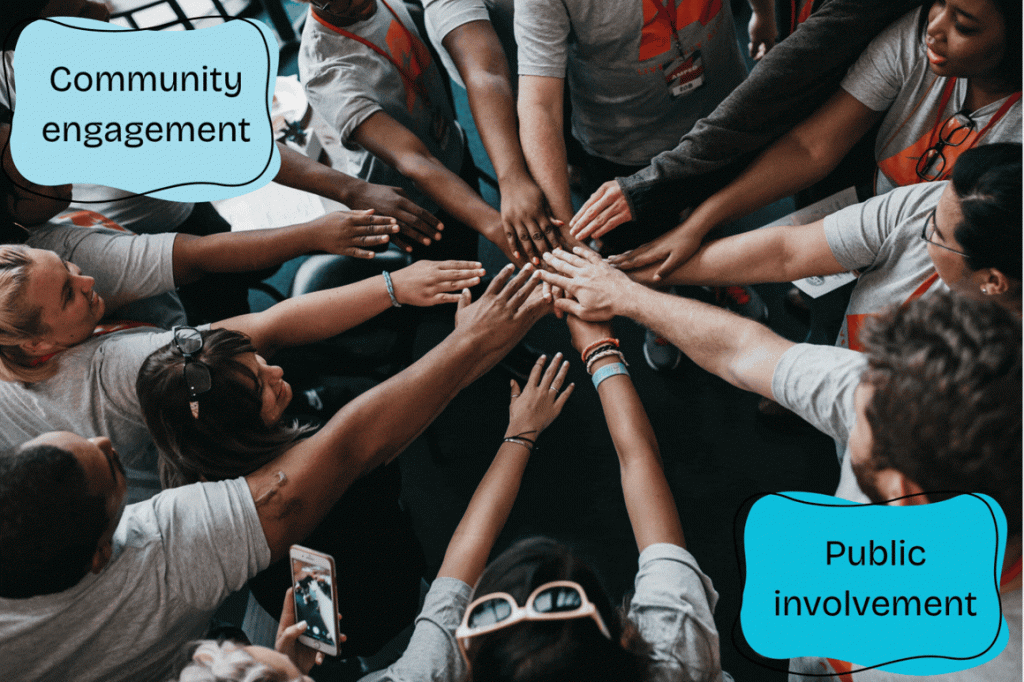
How I Think Research Should Work with Communities
Over the years, I’ve found myself increasingly reflecting on the relationship between public engagement and public involvement in research. These terms are often used interchangeably, and in practice the boundaries between them can be blurry. However, I have come to think that they serve different purposes and, importantly, that the order in which they happen matters.
My view is that meaningful research relationships are best understood as a cycle:
Engagement → Involvement → Engagement
In this model, research happens during the involvement phase. But involvement is much more likely to be meaningful if it is preceded by engagement, and research is much more likely to have value if it is followed by further engagement with communities beyond those directly involved in the project.
Why I Think Engagement Needs to Come First
One thing that has always sat uneasily with me is the assumption that people and communities will be ready to become involved in research as soon as researchers decide they need them.
In my experience, trust rarely works like that.
Researchers are often encouraged to involve communities from the earliest stages of a project, which is undoubtedly important. However, I sometimes wonder whether we underestimate the amount of relationship-building that needs to happen before that involvement can genuinely succeed.
For me, this is where engagement plays a crucial role.
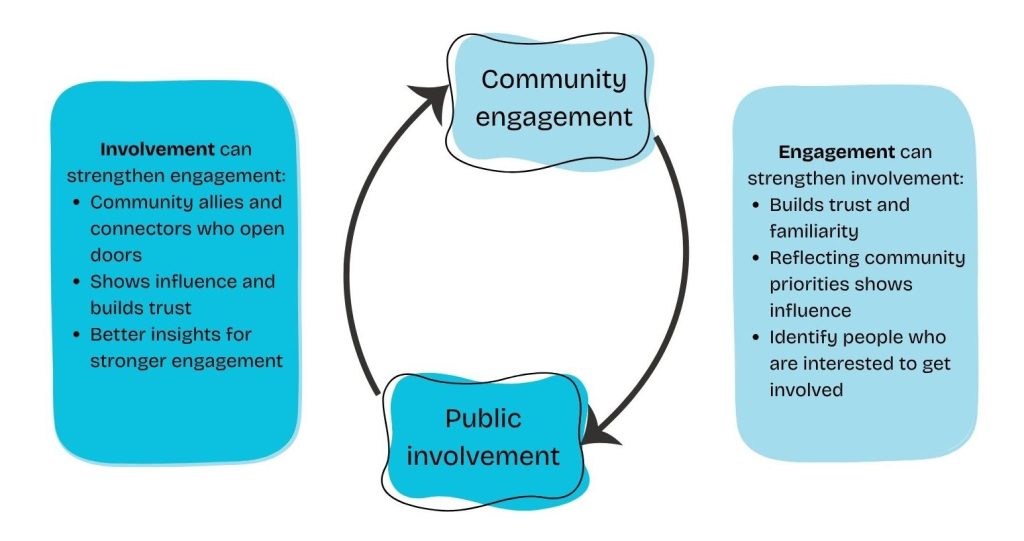
I don’t see engagement primarily as communicating research findings or promoting science. Instead, I think of it as spending time with communities, listening to concerns, understanding priorities and building relationships that may have no immediate connection to research at all.
Sometimes that might involve attending local events, supporting community initiatives, participating in conversations about issues that are not part of anyone’s research agenda, or simply being present. The goal is not necessarily to generate a study, recruit participants or develop a grant proposal. The goal is to build trust.
This can be difficult to justify in a research system that often values measurable outputs and clear returns on investment. There is a legitimate question about whether universities should invest time and resources in activities that are not directly linked to research outcomes.
Involvement Is Where the Research Happens
None of this diminishes the importance of public involvement.
Once trust and relationships exist, involvement becomes the space where research can genuinely be co-produced. This is where people with lived experience help shape research questions, influence study design, challenge assumptions and interpret findings.
In my mind, this is the phase where the research itself takes place.
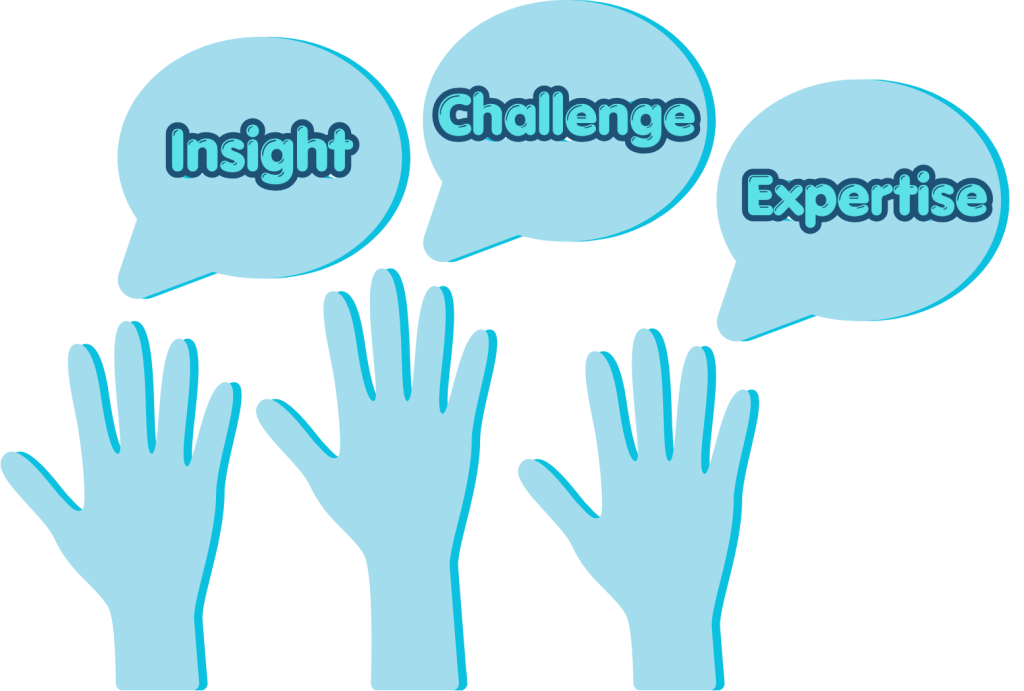
The insight, challenge and expertise contributed by public contributors often improves research in ways that researchers could not achieve alone.
Why I Think Engagement Needs to Happen Again Afterwards
Too often, engagement is discussed as dissemination: communicating findings back to those who participated in a study or presenting results to public audiences. Of course, this matters. Researchers have a responsibility to share what they discover.
But I wonder whether this understanding of engagement is still too narrow. If engagement helped create the trust that enabled the research to happen in the first place, shouldn’t engagement after research also extend beyond the people directly involved?
Rather than simply reporting findings, perhaps this final stage should be about continuing relationships, opening up conversations about what the findings mean, listening to community interpretations and exploring what questions should come next.
In other words, I see engagement not as a bookend to research but as an ongoing process that surrounds it.
A Deliberately Simplified View
I recognise that this framing simplifies a much more complex reality. In practice, engagement and involvement overlap constantly. Relationships continue throughout projects, involvement can itself be a form of engagement, and communities may not draw these distinctions at all.
Nevertheless, I find the idea of Engagement → Involvement → Engagement helpful because it reminds me that research is fundamentally relational.





Leave a Reply