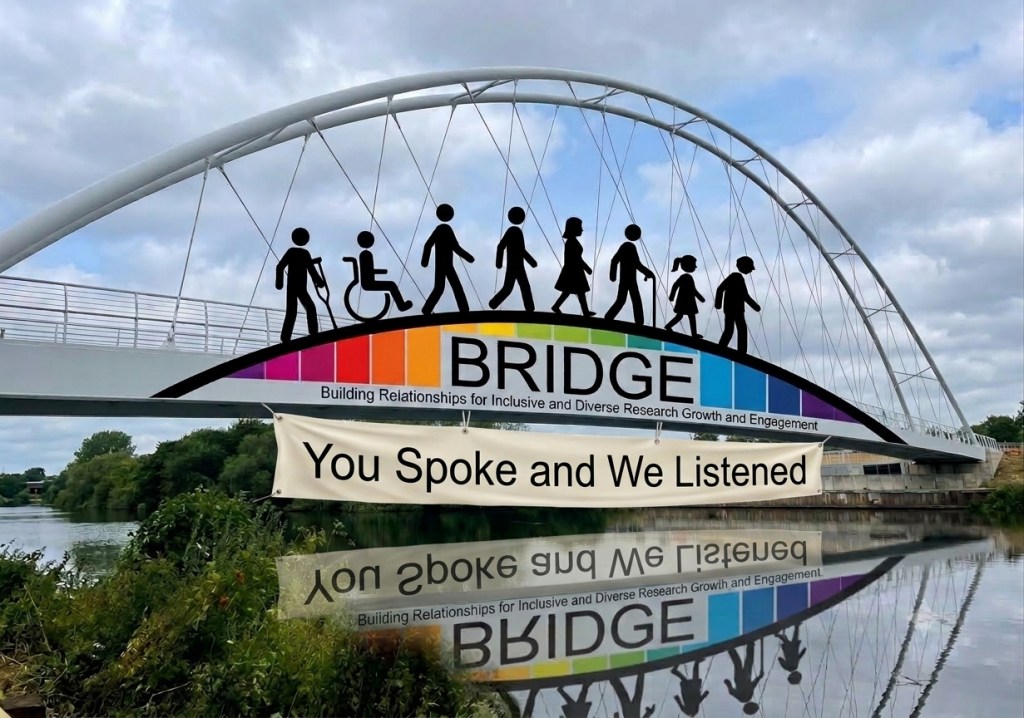
Working with Stakeholders to Bridge the Health Evidence Gap Around Access to Blue and Green Spaces: The Nottingham Waterside Bridge Case Study
It’s great to welcome a new face to the blog. Sam Crossley (Sam.Crossley2@nottingham.ac.uk) is a public health researcher at the University of Nottingham. In this post, they are sharing their approach to public involvement and engagement in research around studying the health impacts of a new Nottingham footbridge.
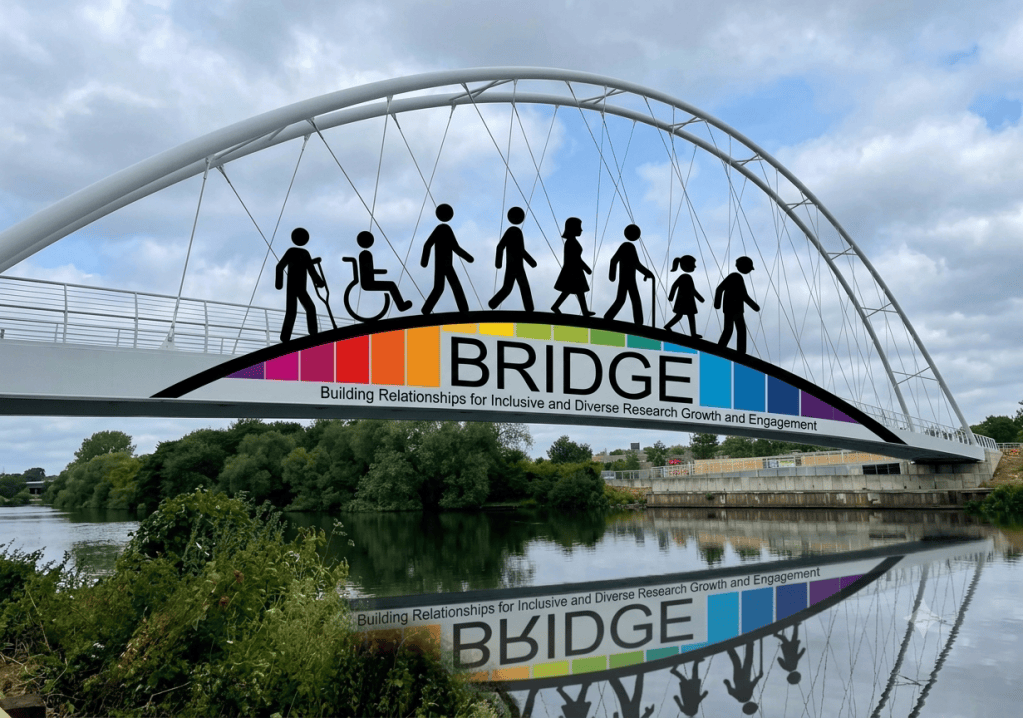
The Nottingham Waterside Bridge is a new pedestrian and cycle bridge over the River Trent in Nottingham, which opened on the 2nd June 2026. Connecting communities on the north bank, including Trent Basin and Waterside regeneration area, with Lady Bay and West Bridgford on the south bank, the bridge forms part of Nottingham’s Transforming Cities Fund programme. Designed to improve access across the river, encourage active travel, increase access to blue and green spaces such as Colwick Country Park and Holme Pierrepont, and support economic growth, the bridge has the potential to influence health, travel behaviour and community connectivity.
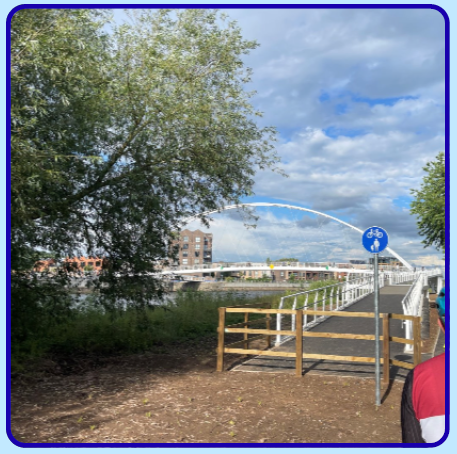
However, the bridge can only deliver its intended benefits if it is perceived as safe, accessible, relevant, and useful by the people it is designed to serve. Recognising this,
“The Working with Stakeholders to Bridge the Health Evidence Gap Around Access to Blue and Green Spaces Project”
was established to ensure that future research and evaluation are grounded in the experiences, priorities and concerns of local communities.
As a case study, the Nottingham Waterside Bridge sits at the intersection of several important public health and urban planning themes, including active travel, access to blue and green spaces, social connectivity, and health inequalities. The communities connected by the bridge differ in levels of socioeconomic deprivation and access to blue-green space, creating an important opportunity to understand how place-based infrastructure investments may affect different populations.
Through engagement with a range of community groups, stakeholders, local residents and bridge users, this project explored a range of questions that will help shape future evaluation. These included:
- Who may benefit from the bridge, and in what ways?
- Are there any unintended consequences or disadvantages associated with the bridge?
- What are residents’ priorities and concerns regarding the bridge?
- What factors may encourage or discourage people from using the bridge?
- What data should be collected to understand its impacts?
- How can local people be meaningfully involved in future work?
By working directly with those who live, work, and travel in the area, the project ensures that future evaluation priorities are meaningful to the communities the bridge serves. This approach will help create a stronger evidence base for understanding the health and social impacts of the bridge and future urban infrastructure projects.
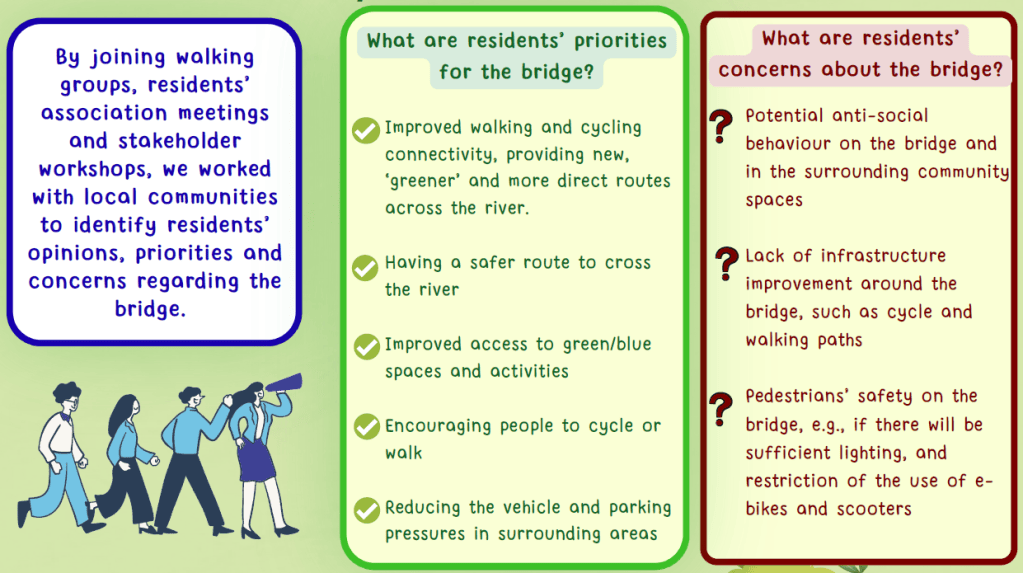
So, what did we do?
We explored public opinion about the bridge and wider evaluation through various channels, including:
- Workshops with stakeholder groups, such as the Nottingham Blue-Green Group
- Discussions with community groups, such as Lady Bay Community Association
- Joining local community group activities, such as walking with the Nottingham Ramblers and Runspire Notts
- Outreach and engagement with local organisations and stakeholders, including charities, local authorities and community sports associations.
- Hosting a stall at the Waterside Bridge Family Fun Day, with a range of public engagement activities:
- A voting activity exploring perceptions of the bridge’s benefits and potential impactsAn open-ended post-it note activity capturing wider reflections from visitors
- A board game co-design activity exploring who might use the bridge, why they might use it, and what experiences they may encounter during journeys across and around the bridge.
The findings from this engagement work are presented in a report, which can be accessed here.
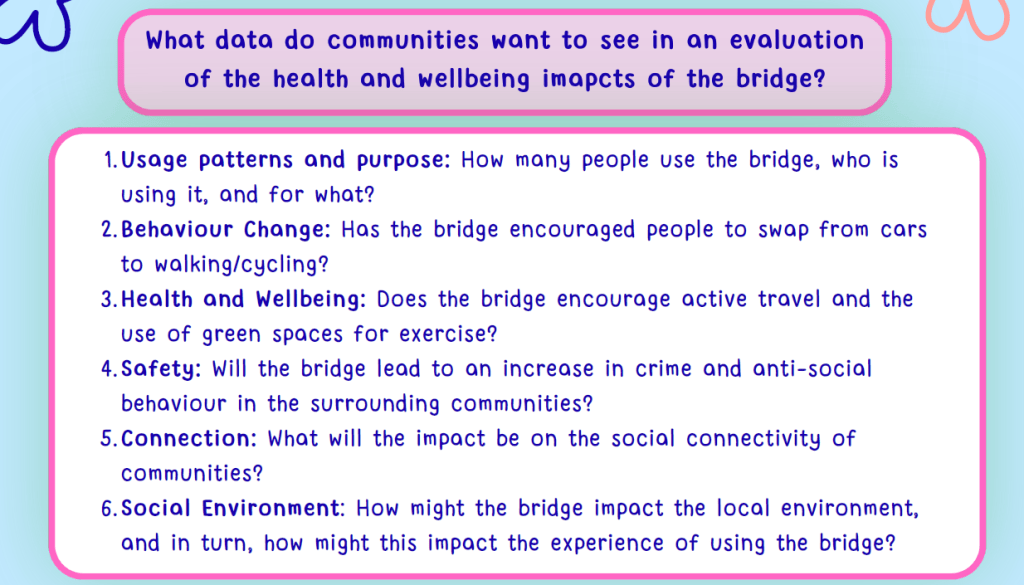
This work was generously funded by the University of Nottingham Participatory Research Fund 2025/26 round, and was a collaboration between the Schools of Medicine, Geography and the Faculty of Engineering.



Leave a Reply